
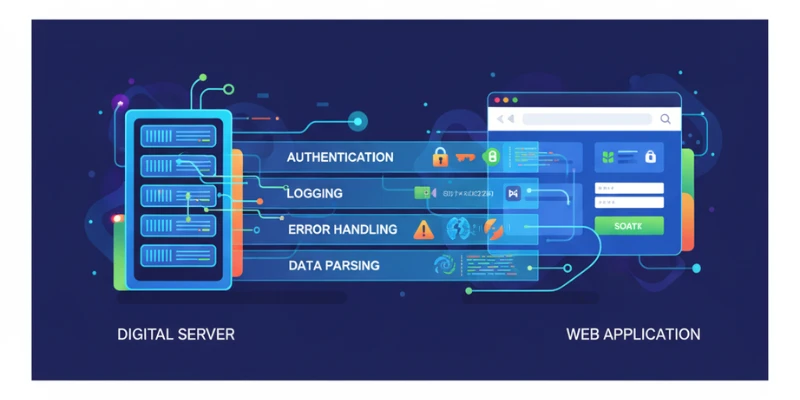
Middleware plays a crucial role in backend development by acting as an intermediary layer that processes requests before they reach the final destination in a web application. Whether you are building APIs, web applications, or microservices, understanding middleware is essential for improving performance, security, and overall functionality.
If you are looking to deepen your backend skills and gain hands-on experience, joining a Full Stack Developer Course in Mumbai at FITA Academy can help you master these concepts effectively. This article will discuss the concept of middleware, the various types available, and its advantages for backend development.
What is Middleware?
In backend development, middleware refers to a set of functions that are executed in sequence as an application processes incoming requests. Middleware sits between the server and the request handler, performing tasks such as authentication, logging, error handling, and data processing before passing the request along to the next layer.
Think of middleware as a series of checkpoints through which every request passes. Each checkpoint performs a specific function and then forwards the request to the next. This approach allows developers to maintain clean, organized, and modular code. It also makes the backend system easier to manage, debug, and scale, as responsibilities are divided into distinct middleware components.
Types of Middleware
Middleware comes in various types, each designed to handle specific tasks in backend development. Here are some of the most common types:
Authentication and Authorization Middleware
Authentication middleware ensures that a user is logged in before accessing certain routes or resources. Authorization middleware, on the other hand, verifies whether a user has the required permissions to perform specific actions. This combination protects sensitive parts of an application from unauthorized access. If you’re looking to gain a deeper understanding of security practices like authentication and authorization, enrolling in a Full Stack Developer Course in Kolkata can provide you with the skills you need to implement these concepts effectively in your projects.
Logging Middleware
Logging middleware tracks the details of incoming requests, such as URLs, HTTP methods, and status codes. This information is valuable for debugging, monitoring application performance, and understanding user behavior. Logging also allows developers to detect patterns or potential issues early, improving overall system reliability.
Error Handling Middleware
Error handling middleware is designed to catch and process any errors that occur during request handling. It can return meaningful error messages to users while logging details for developers. This prevents the application from crashing and helps maintain a smooth user experience without exposing sensitive information.
Data Parsing Middleware
Data parsing middleware processes incoming request data and converts it into a usable format. For example, JSON or URL-encoded data can be parsed and made accessible for further processing. This ensures that the backend can handle data efficiently and reduces the risk of errors caused by improperly formatted inputs.
CORS Middleware
Cross-Origin Resource Sharing (CORS) middleware allows backend applications to specify which domains are permitted to interact with them. This improves security by preventing unauthorized websites from accessing backend services. To master web security practices like CORS and more, taking a Full Stack Developer Course in Delhi can help you gain hands-on experience and implement robust security features in your applications.
Benefits of Middleware in Backend Development
Middleware offers several advantages that make backend development more efficient and manageable:
Modularity and Scalability
Middleware allows developers to separate concerns into individual functions. This modularity makes it easier to scale applications, as new middleware can be added or removed without affecting other parts of the system. It also encourages cleaner code and faster development cycles.
Enhanced Security
Middleware plays a critical role in strengthening security by handling authentication, authorization, and input validation. By vetting requests prior to their access to core functionality, it aids in mitigating threats like SQL injection, cross-site scripting, and various other vulnerabilities.
Simplified Maintenance
With middleware, specific tasks are isolated into independent functions. This makes maintaining and updating the application easier. Developers can troubleshoot or enhance individual middleware components without disrupting the entire system.
Performance Optimization
Middleware can improve application performance. Features such as caching, compression, and rate limiting help decrease server workload, shorten response times, and deliver a more seamless experience for users. If you’re looking to learn how to optimize application performance with these techniques, enrolling in a Full Stack Developer Course in Gurgaon will give you the practical knowledge to implement these strategies effectively in your projects.
Middleware is an indispensable part of backend development, acting as the backbone that ensures efficient and secure request handling. From authentication and logging to error handling and data parsing, middleware streamlines application operations while promoting modularity, security, and performance. Understanding and effectively implementing middleware is essential for any backend developer aiming to build scalable and reliable web applications.
Also check: Client-Side Routing vs Server-Side Routing – Pros and Cons